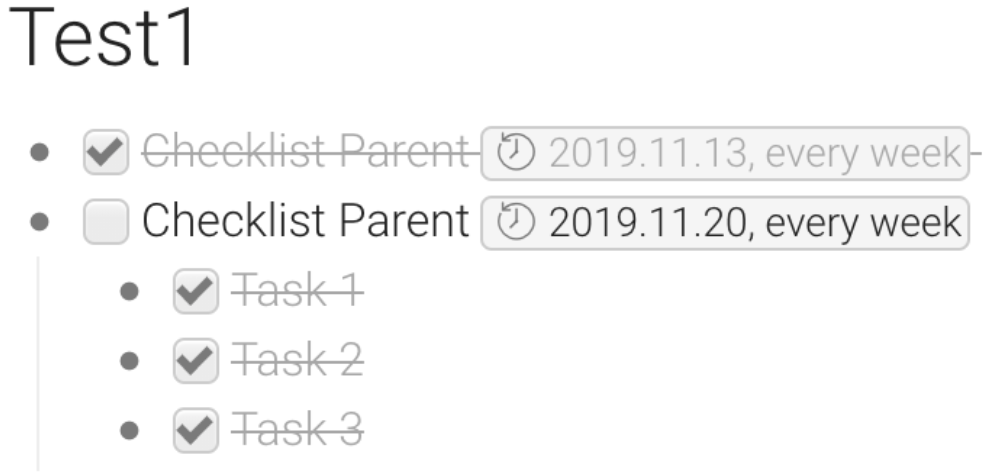
I have some recurring tasks. e.g. Every week I need to do Computer Backups and this effort includes a dozen tasks.
So I created an item, “Computer Backups” and I gave it a date of !(2019-07-03 | 1w) . Then I made it a checklist and added 12 indented items under it.
The first time I executed Computer Backups, I checked off each indented item, and when they were all done, I checked off the top level Computer Backups. I got a new top-level “Computer Backups” item, but none of the sub-items.
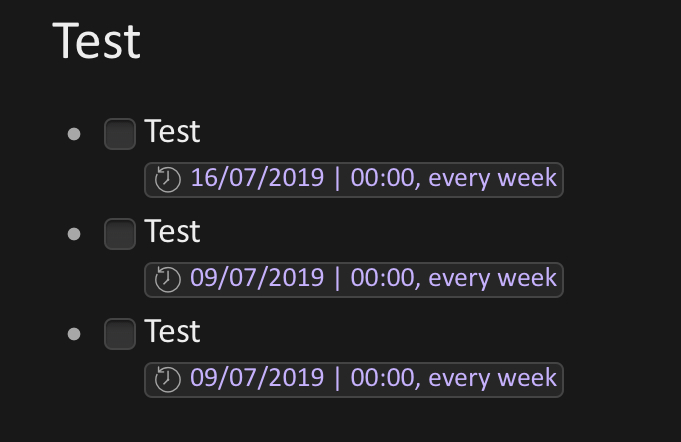
Edit: I just did some testing on this and yes, if you have the option:
then indeed the new item doesnt have children, which is not the behaviour we want. Can we flag this up @Erica@Shida ?
With the option:
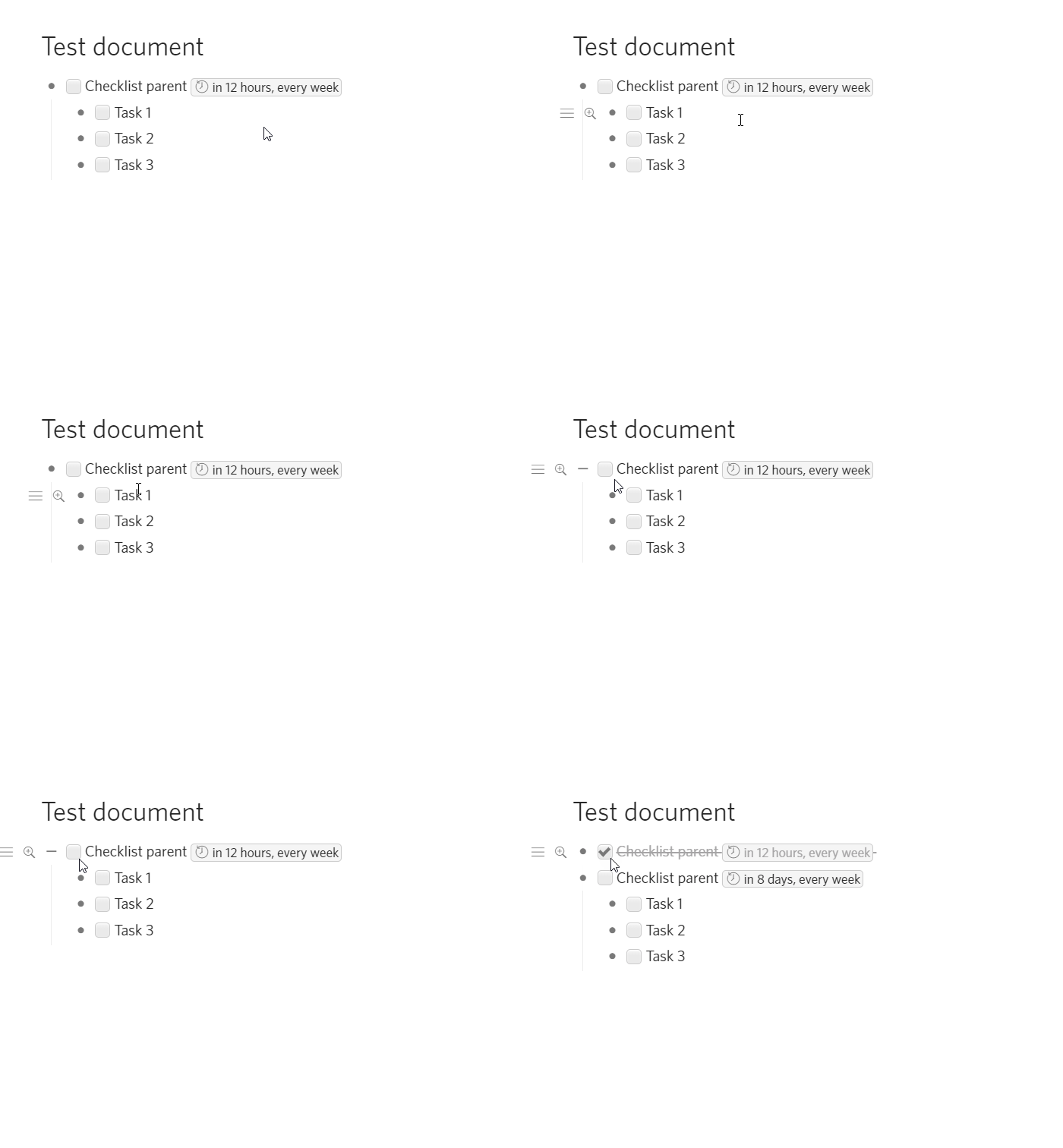
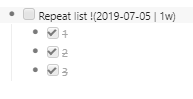
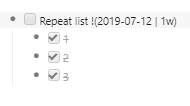
it all works fine though, a la:
Before checking the parent item:
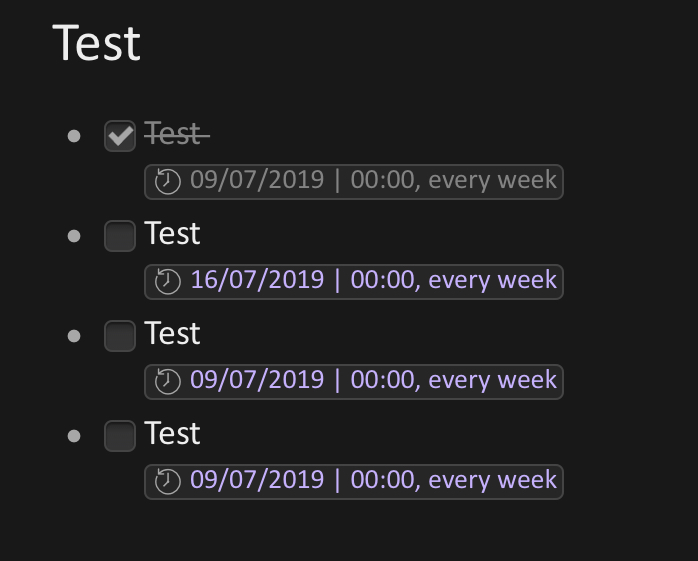
After checking off parent item (note date change):
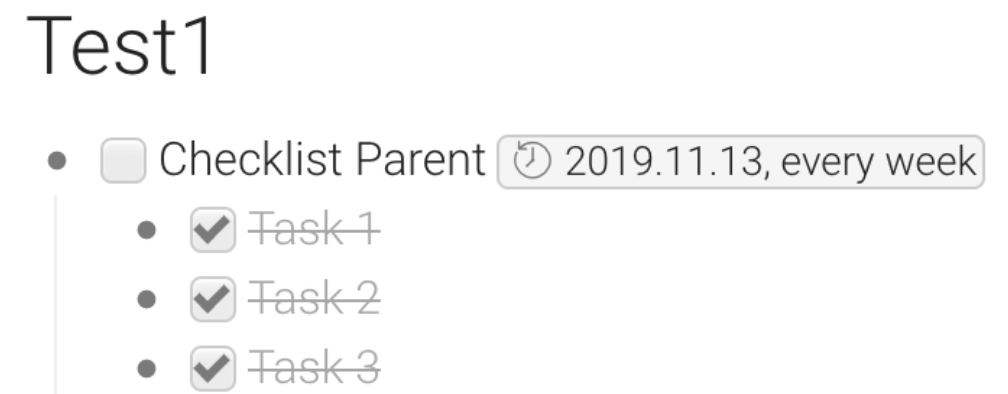
Thank you for investigating. I don’t agree that it all works fine with “existing date gets updated”. It shows that the detail items for the future are completed.
If I mark the roll-up task “Computer Backups” complete for this week, I haven’t completed the sub-task “Backup Wife’s Computer” for next week.
If the recommended practice is to use “Existing date gets updated” then updating that date should result in auto-clearing the checkboxes of the child items.
Sorry for the late reply, from my testing, the old item will lose the subitems, where the new item will have them. This sounds different from what you described, @Susan_Kleinfelter. Did I misunderstand anything?
There might be some misunderstanding, because I’m clearly seeing different results. Maybe because what we mean by “the child items get moved” is different?
I see, so you expect the checked items to get unchecked.
I didn’t understand this part when you said “I got a new top-level ‘Computer Backups’ item, but none of the sub-items” in the original post. Is it because you hide completed items by default?
I’m sorry, but I don’t recall. (It has been a while since I said that.) The long and the short of it is that if I check-off a recurring group-level item, I’d expect to see a completed group and a new, ready-to-use group and children.
If that’s not what the product is intended to do, I can live with that, but it is hard for me to imagine that anyone (outside of someone looking at code) would expect completing a group-level recurring item to do anything other than set you up with a group (parent and children) ready for the next occurrence.


 .
.